From product creation to business management
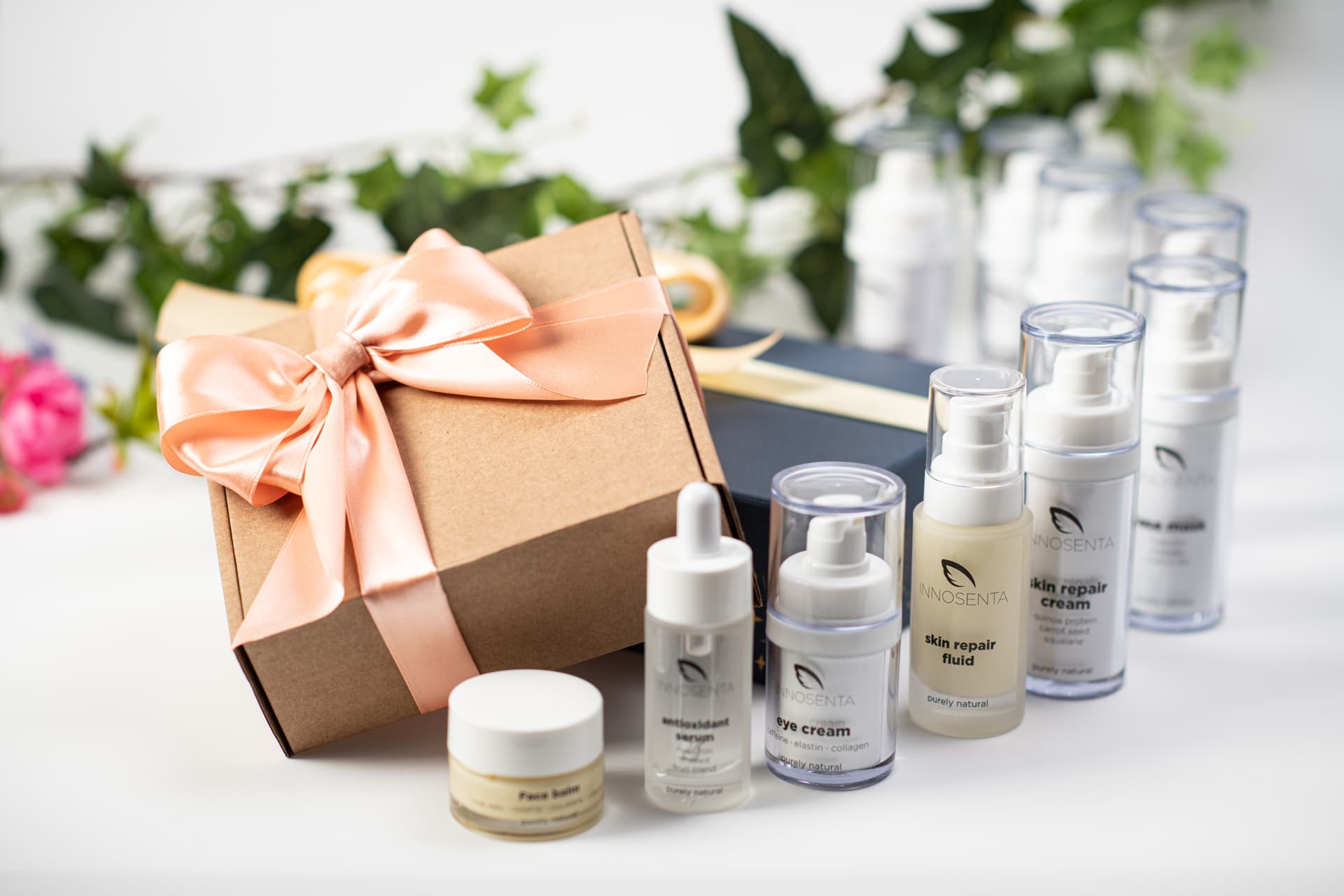
Working under the brand Innosenta, Sigulda-based company Spring Breath produces completely natural face and body care products. The CEO of the company Viktorija Zariņa develops the product formulas from scratch herself, without using ready-made cream bases. Although the majority of the company’s customers are currently in Latvia, its products have already reached buyers in France, Romania, the Netherlands, Ireland, Denmark and Norway. The company’s next goal is to develop its marketing and sales activities in order to turn individual overseas orders into a targeted export strategy. To this end, for the past three years, the company has been utilising the support of the business incubation programme run by the Investment and Development Agency of Latvia (LIAA) out of its Sigulda office.
Viktorija is a qualified physical therapist, and before founding the cosmetics company, she ran her own private practice for many years. Although her experience of working with clients and her in-depth knowledge of biochemistry, pharmacognosy and pharmaceutical formulation technology have helped her to create products, setting up the company required her to acquire a completely different set of skills. The first LIAA support programme she joined was a pre-incubation programme to better understand how to turn a product idea into a viable business.
“Running a private physical therapy practice cannot be compared to running a cosmetics company. When I started manufacturing cosmetics, I had to think in a completely different way: about product development, investment, sales and the company’s future goals,” she explains.
Viktorija describes herself as a researcher and product developer – someone who loves nothing more than experimenting, testing formulas and seeking new solutions. Setting goals and planning business development, however, seemed complicated at first: “When they told me that I had to set specific goals and plan how to achieve them, I can honestly say that it was quite a challenge. I’m more of a researcher – I enjoy developing products and getting stuck in. However, the team at the LIAA office in Sigulda helped me understand what I wanted to achieve and how to think of my idea as a business,” she says.
During the programme, the entrepreneur made use of training, mentoring support and advice from staff at the LIAA office. The financial support received was invested in product development and the creation of the company’s online shop, as well as used to participate in the Baltic Beauty trade fair. In this way, the support has helped both to refine the products themselves and to take the first steps towards promoting them more widely on the market. At the same time, Viktorija makes no secret of the fact that managing state support can sometimes be complicated for a small business.
“It is not easy for a new business to accurately forecast all the necessary expenditure six months in advance, as these figures cannot subsequently be adjusted in the support plan. For example, when taking part in a trade fair for the first time, it’s only during the process that additional issues come to light which you hadn’t even thought of at the start. However, if the costs haven’t been forecast in advance, they can no longer be specified, and you cannot receive state aid for them. In my view, greater flexibility would be helpful in this regard,” the entrepreneur shares her experience.
Viktorija admits that, at the start, her husband – who has experience in project management – helped her prepare the documents. “The incubation process hasn’t been an easy journey for me, but it has helped me see what I don’t yet know and what I need to develop in myself. It has been a journey of growth not only for the business, but for me personally as well. Creating a product is one thing, but turning it into a sustainable business requires a completely different set of skills,” concludes Viktorija.
Information material prepared with the support of the European Regional Development Fund