Woodheart not only uses state support instruments itself, but also promotes them to others
Woodheart is a woodworking company based in Valmiera District that specialises in the production of custom-made furniture, doors, interior elements, and other non-standard solutions. From a small family business, it has grown into an export-oriented manufacturer with approximately 50 employees, and the company’s products are already available in 18 foreign markets. Currently, exports account for about 80% of turnover, with the most significant markets being Norway, Denmark, the United Kingdom, France, and the Netherlands.
State support instruments have played a significant role in the company’s development—cooperation with the Investment and Development Agency of Latvia (LIAA) began at the very start of business operations, through the business incubation programme at the LIAA office in Valmiera, where the company received both practical support and advice on the first steps in business. Later, other instruments were also utilised, which helped expand production and strengthen competitiveness in export markets.
“In the early days of the company, it was very important not to be left on your own with your ideas and questions. In the incubator environment, we were able to receive both practical advice and the confidence that we were heading in the right direction. Later, support programmes allowed us to invest in equipment and development faster than we could have with our own resources alone, since we started without investors or significant initial capital. “It was our own work and state support instruments that helped the company grow,” says company CEO Tālis Grinbergs.
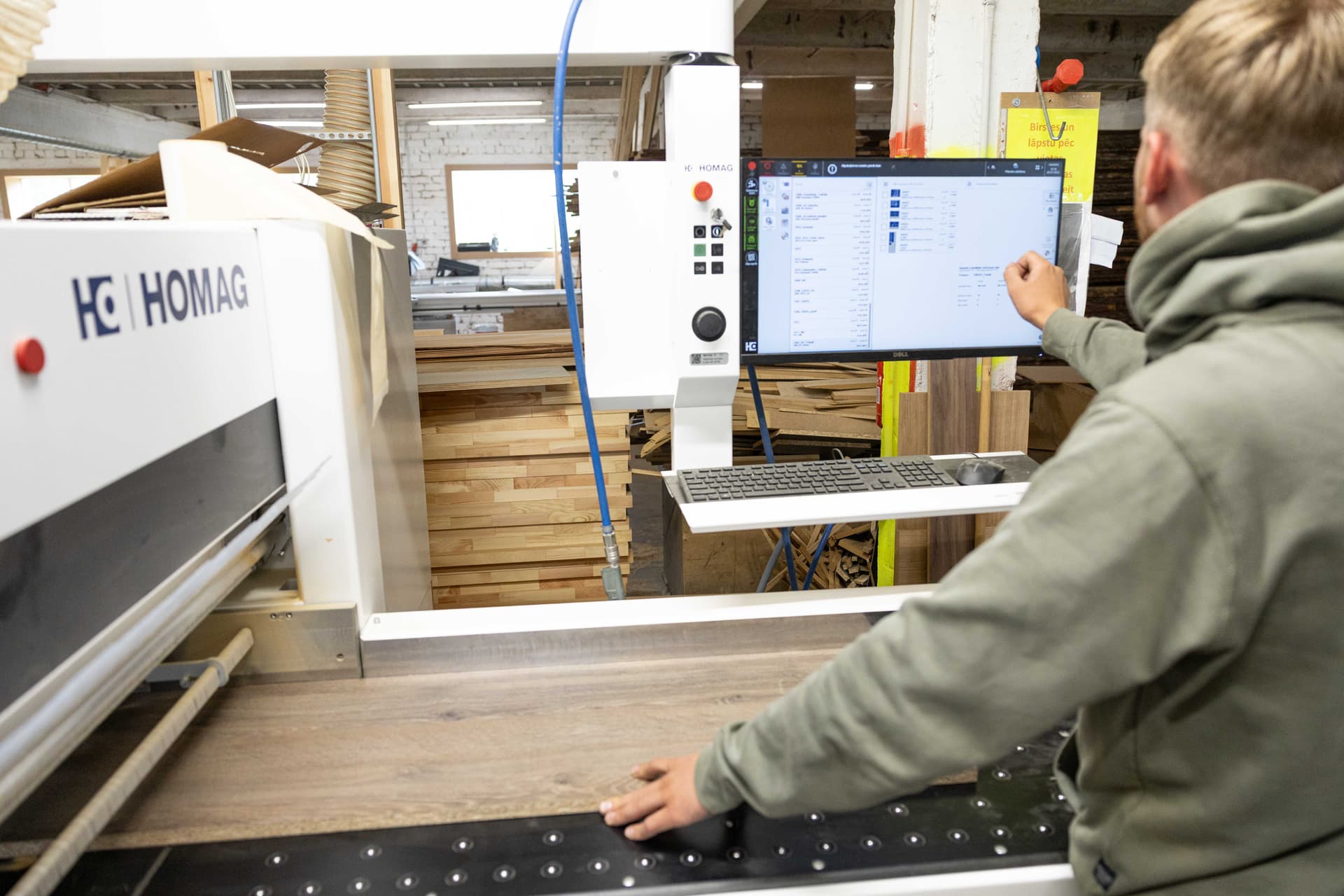
State support for digitalisation has been particularly significant for the company. At Woodheart, a large portion of processes are now planned and designed digitally, which allows for more precise preparation of drawings, more efficient organisation of production, reduced risk of errors, and faster fulfillment of customer orders. The company purchased the equipment necessary for these tasks directly with the help of digitalisation support. Moreover, as the company reveals, this is also a key competitive factor in the segment of individual and non-standard projects.
The company’s manager emphasises that using support tools is not as complicated as is often assumed. The company prepared most project applications and the necessary documentation on its own, without involving external consultants.
“Many entrepreneurs still think that applying for support programmes is too complicated or that it’s impossible without consultants. Our experience shows the opposite—if you’re willing to dig in even a little, you can easily handle it on your own. As a company, we’re very friendly—we don’t view everyone around us as competitors. After all, the more strong and growing companies there are in Latvia, the better it is for the entire business environment. That’s why we don’t hide our experience and are happy to share it with others,” says Mr Grinbergs.
Information material prepared with the support of the Recovery Fund. The author is solely responsible for the content of this publication. The views expressed herein do not reflect the official position of the European Union or the European Commission.