Bitlake Technologies: from research at Ventspils University of Applied Sciences to technologies for the European space sector
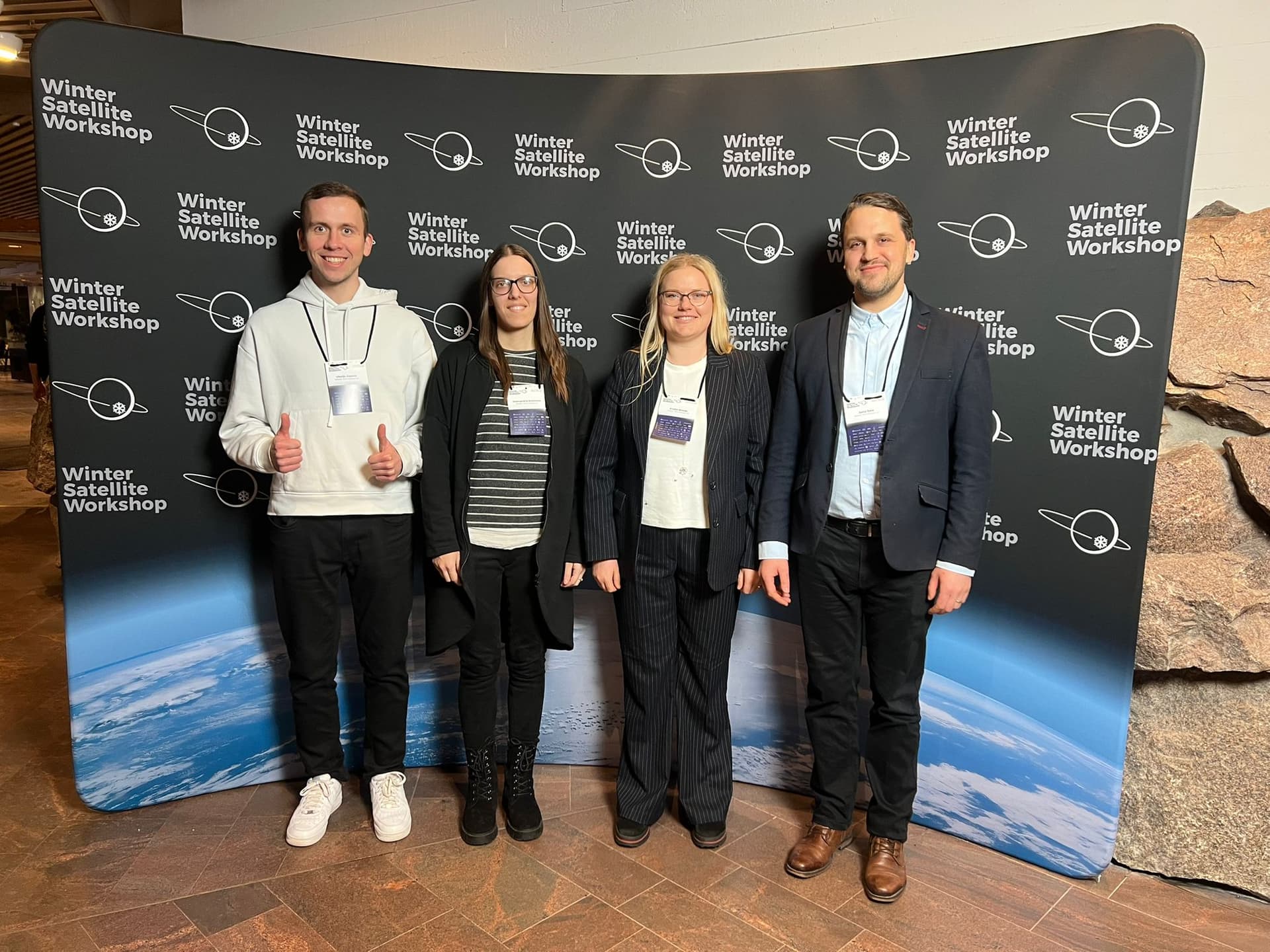
Bitlake Technologies, a deep-tech company founded in Latvia, operates in a narrow but undeniably promising technology niche—the company develops software solutions for specialised microchips that help process images in high-precision camera systems, including those used in the space industry. The support of the Investment and Development Agency of Latvia (LIAA) has also played a significant role in the company’s development; by participating in a business incubation programme and receiving co-financing and practical support during the development process, LIAA has helped accelerate growth and develop new products.
“Every microchip sector has its own niches. Other companies specialise in data security, others in processors, while we focus on FPGA-type microchips—these are programmable microchips used in various high-precision technologies. Our specialisation is image processing, and we develop solutions that other companies integrate into their camera systems, satellites, and other products,” says Jānis Šate, co-founder of Bitlake Technologies.
Bitlake Technologies traces its origins to Ventspils University of Applied Sciences. Its founders are electronics engineering graduates who initially worked with these technologies in research both in Latvia and abroad. Seeing the demand in the market, they gradually became convinced that their accumulated knowledge could be turned into a competitive business. The company was officially established in 2021 but began active operations a year later.
“We saw that there was a large and growing demand in the market for this kind of knowledge and experience. At that moment, we also realised—perhaps we shouldn’t accept job offers at other companies but instead use our accumulated experience to build our own company,” Mr Šate explains.
Latvia’s cooperation with the European Space Agency at the time provided an additional incentive, opening opportunities to participate in international projects.
Since the company operates in a very specific segment, it has virtually no direct competitors in the Baltics, while similar companies can be found in countries such as Germany and Italy. As Mr Šate explains, rapid growth in the space and high-tech sectors rarely happens overnight—development processes are long, complex, and capital-intensive. That is why Bitlake Technologies’ growth has been gradual. Last year, the company’s revenue reached approximately EUR 300 000, and the team consists of five to seven people, depending on the scope and workload of projects.
“Revenue is growing gradually, perhaps not as quickly as we’d like, because in this industry, results don’t come immediately. However, the trend is upward. Currently, the company’s main revenue comes from European Space Agency projects, as well as collaboration with technology startups in Europe,” reveals the company’s CEO.
In the company’s specific niche, traditional marketing is not a decisive factor. Reputation, prior experience, and a regular presence at industry events are far more important. “It’s enough for us to show that we’ve developed similar technologies before and can deliver complex solutions. Since the niche is very specific, the demand for such expertise is quite high. That is why it is important to participate in conferences and industry events where we can meet potential partners. For example, one of our current main clients is a company from Belgium, with whom our collaboration began after a conference in the Netherlands at the European Space Agency’s headquarters,” explains Mr Šate.
Currently, the company focuses its operations on Europe—Belgium, the Netherlands, Germany, Switzerland, Denmark, Norway, and Finland.
To date, the company’s main offering has been software modules, but the next phase of development also includes the development of proprietary hardware. One of the most promising areas from a business development perspective is specialised camera platforms for space applications, which are currently being developed in collaboration with the European Space Agency. The company notes that in the future, this would allow it to supplement its current service model with in-house products and increase revenue. At the same time, the company is also closely watching the development of the European microchip industry, where demand for local technological solutions is growing.
Information material prepared with the support of the European Regional Development Fund