Design Tree developing custom manufacturing equipment and aiming for EUR 1 million in turnover this year!
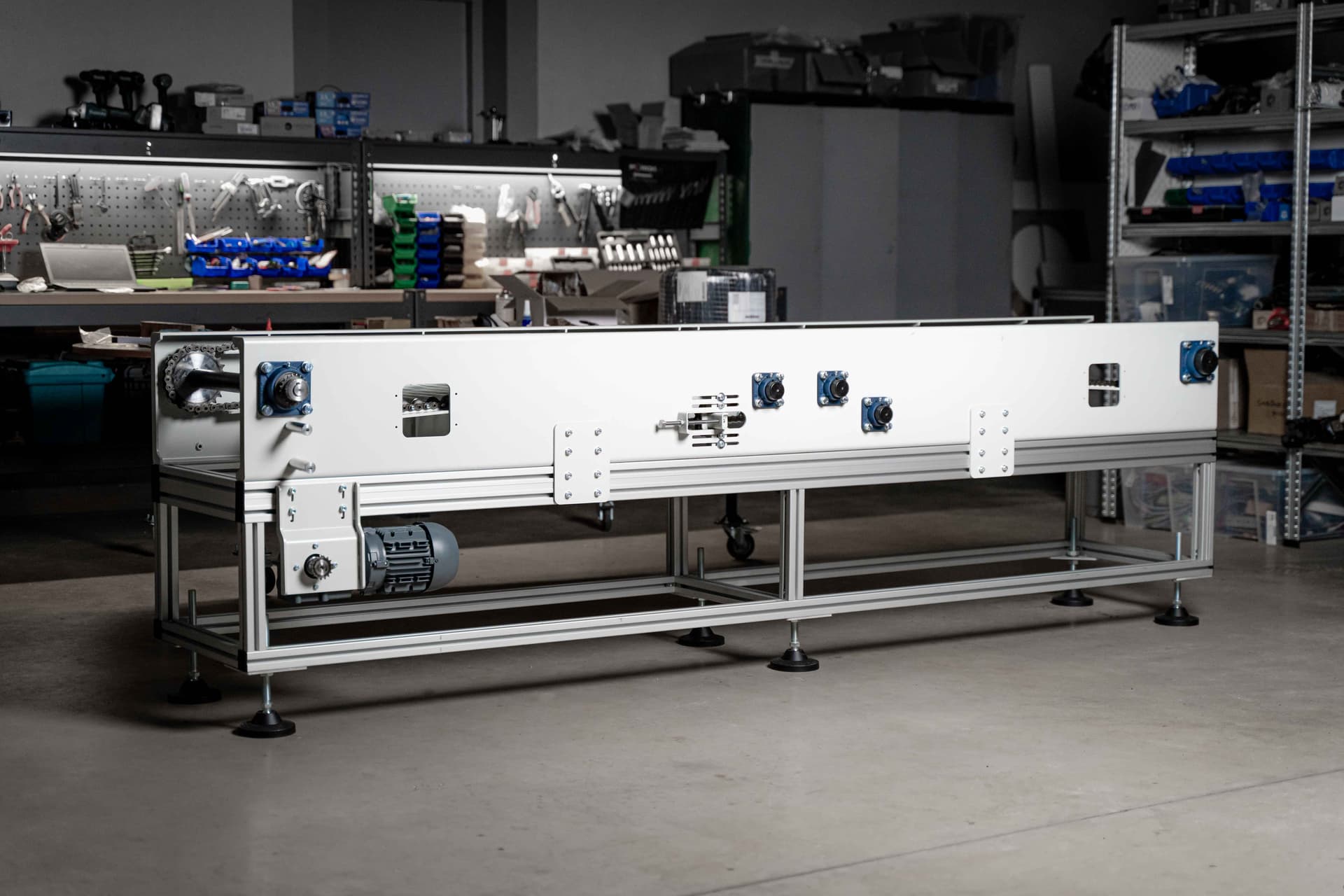
Latvian engineering company Design Tree specialises in the design and manufacture of custom equipment for companies with specific needs. Instead of offering off-the-shelf solutions, the company develops custom-tailored equipment and technological solutions, helping clients automate production, develop new products, and boost productivity.
The company is based in Ādaži, where the Design Tree production facility and design office are located. In its approximately 200 square-metre facility, the company produces both custom-designed equipment and prototypes for client projects. The company notes that, as it grows, it is also considering further expansion of its production capacity.
Design Tree works with companies across various industries—from food manufacturers to the industrial and heavy machinery sectors, as well as the military sector, where the company has obtained the necessary license. Its client base includes well-known Latvian companies such as Balticovo, Primekss, and Rūdolfs, as well as foreign companies. One of the current projects is the development of a complete production line in collaboration with the eco-friendly household chemicals manufacturer Purenn Group, which involves designing a production line for the entire process—from loading empty containers to product filling, labelling, and packaging. This will also be one of the company’s first products, as it is investing its own resources in its development to offer the solution to other similar manufacturers as well.
The company has been operating in this specific sector for nearly seven years, and, as its CEO Matīss Irbe explains, each subsequent year of operation has so far been busier and more successful than the previous one. In recent years, the company’s revenue has grown by approximately 30–40% annually, and this year could be the first in which it achieves a revenue of one million euros. “A major factor in our growth is that the scope of our projects is becoming increasingly larger and more complex. Currently, we have a strong order log, several initiatives under-way, and many projects in the implementation phase, so we hope this year will be the first in which we reach a turnover of one million euros,” says Mr Irbe.
It is precisely the ability to offer a full-cycle solution that is one of the company’s most significant benefits for clients. As the company explains, collaboration typically begins with an analysis of needs and ideas, followed by the development of a conceptual solution, design, prototyping, testing, manufacturing, and final installation at the client’s production facility. In some cases, the company assists clients not only with equipment development but also with the development of their own products and their introduction into mass production.
Although the company’s core operations are in Latvia, an increasing emphasis is being placed on exports. Currently, exports account for approximately 8% of total operations, but the company is working purposefully to increase this share. The main export markets are currently Northern Europe—particularly Sweden, Finland, and Norway—while Central Europe, including Germany, Austria, and France, is also viewed as a promising direction, where the first cooperation projects have already been implemented.
Cooperation with the Investment and Development Agency of Latvia (LIAA) has also played a significant role in the company’s development, using incubation programmes and export support opportunities that have helped both in the early stages of operations and in expanding into foreign markets.
Customer acquisition is based on both the company’s reputation and active efforts to build new contacts. Initially, personal contacts and recommendations played the most significant role; however, as the company has grown, the website, social media, targeted outreach, and participation in international trade shows have become increasingly important.
“The best advertising is still a job well done and customer referrals. However, while reputation and recommendations matter a great deal in the local market, in-person meetings are particularly important for exports. It is precisely at international trade shows that we have gained most of our foreign contacts and clients,” Mr Irbe explains.
The CEO makes no secret of the fact that results in this industry do not come quickly—it often takes a year or even two from the first meeting to a closed deal. That is why building long-term relationships and maintaining a regular presence in the market are essential. “When it comes to developing custom equipment, clients weigh their decisions carefully—they must evaluate investments, technical solutions, and returns. That’s why a lead we get today often doesn’t turn into an actual project until a year or two later. In this industry, patience and building trust are key,” Mr Irbe notes.
Alongside working with clients, Design Tree continues to develop the company itself. Currently, it employs a team of 10 people, all of whom are engineers. This is also one of the main challenges to growth—attracting qualified specialists in this field is not easy. However, the company is gradually expanding its team, and at the same time, it is also focusing on the development of its production operations.
Information material prepared with the support of the European Regional Development Fund