Smart sports equipment created in Latvia protecting athletes from injury
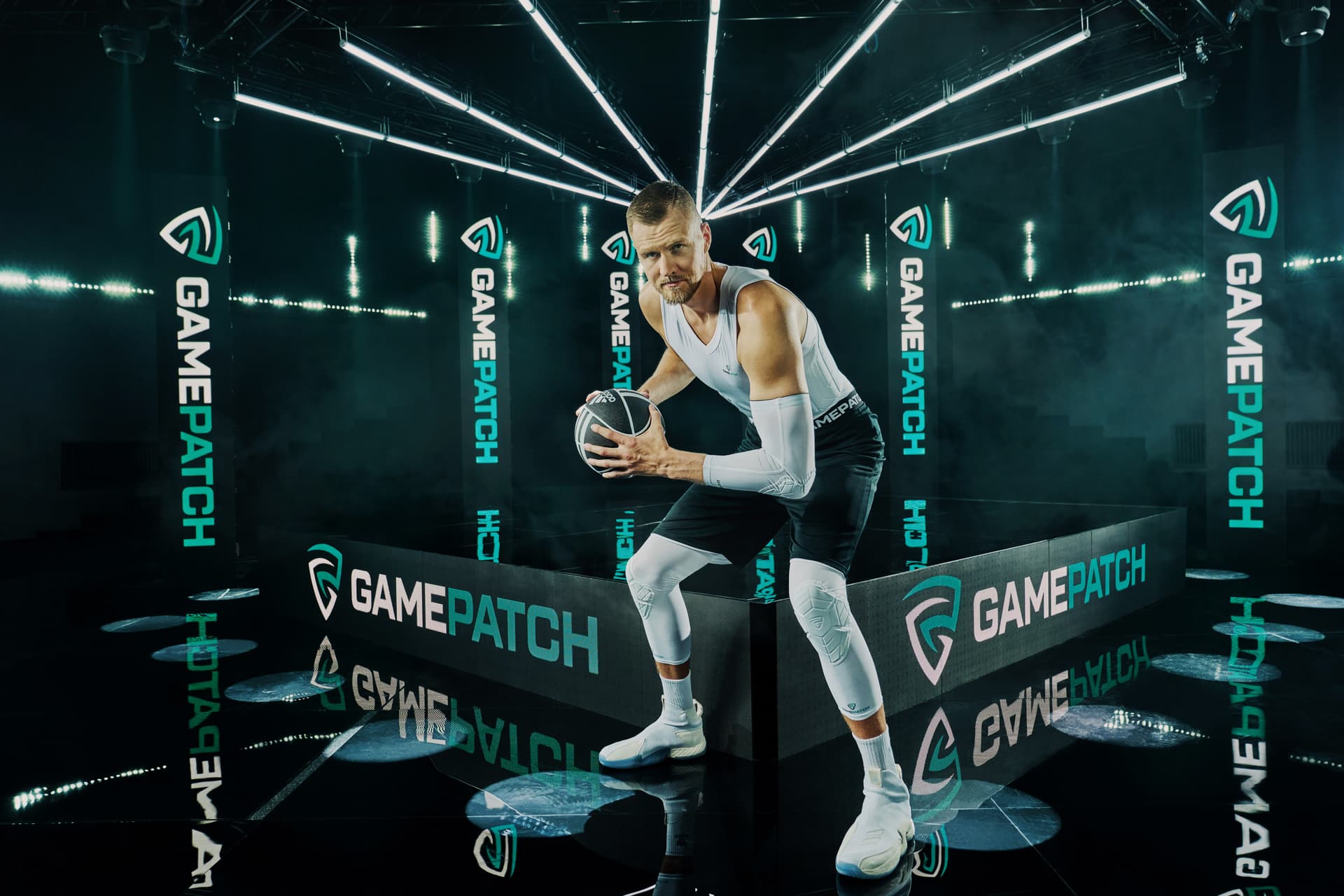
In basketball, handball, volleyball, and soccer, collisions with other players, falls, and bruises are routine, but each injury can mean missed training sessions or even an entire season for an athlete. Latvian company BP Sports offers an innovative solution to this risk—it develops and manufactures sports protective equipment and functional sportswear under the Gamepatch brand. Its main advantage is a smart shock-absorbing material that adapts to the athlete'’ body, does not interfere with movement, its protective properties being activated at impact.
“What makes us unique is that the protective material adapts to the shape of the body,” says Andis Blinds, co-founder of BP Sports. “At first, it is relatively stiff, but when it encounters the body, the material softens and adapts to the shape of the body. Athletes hardly feel it during routine movements, but in the event of an impact or collision, it effectively absorbs the shock and protects against injury.”
The origins of the business idea can be found in Andis’ own experience in sports—he is a former goalkeeper for the Latvian floorball team. Based on his knowledge in this field, Andis initially created the floorball goalkeeper equipment brand Blindsave, which, under his leadership, has developed into a world-class brand in its niche and is now recognised and used by world-class athletes. It was precisely while working with various protective materials and constantly searching for the most effective combinations that the idea for a new business direction with much greater potential arose.
“We actually created this material by accident, and only later realised that it has a lot of potential and can be used in many other sports,” says Andis. This led to the creation of the Gamepatch brand—a name that is both practical and symbolic.
“We chose the word ‘patch’ deliberately: it means both a patch and a plaster, symbolising protection against injuries. We like the idea that a patch is an element that protects the game, covers its weak spots and allows the athlete to continue playing even in difficult moments,” he explains. Choosing a name was not easy—as Andis jokes, in the saturated sports industry, many good names have long been taken.
The Gamepatch range includes both relatively simple and technically more complex solutions. The most popular are basketball and handball elbow pads—the most widely used types of equipment in team sports. At the same time, the company is also developing other types of protective gear, such as shirts or undershirts with protective elements in the rib, hip, or thigh areas, which help athletes prevent injuries. To ensure that the protective equipment is not only comfortable but also effective, alongside production the company also pays great attention to testing, comparative measurements, and the precise selection of material parameters: thickness, density, and elasticity.
Competition in the sports market is intense, but Gamepatch is positioning itself in an area that global brands often leave in the background. “We compete with all the big sports brands like Nike and Adidas, but they have somewhat neglected the sub-sector of protective gear,” Andis says. He emphasises that big brands focus on footwear and mass-produced clothing, but protective equipment is specific, and the market is narrower and more complex. At the same time, there are also strong competitors—niche players, especially in the United States.
Like many new brands in the sports industry, Gamepatch’s path to market has not been easy. “The beginning is always the hardest — people like the product, the reviews are good, but you are completely unknown, and it is very difficult to convince stores to take a risk with a new brand,” admits Andis. However, by working purposefully on brand recognition and relationships with partners, the situation has now changed. The company also benefited from a strategic decision, namely in 2024, the company attracted world-renowned Latvian basketball player Kristaps Porziņģis as an investor and partner, which has given the brand additional credibility and strengthened its position in the international market.
“In parallel with sales, we are purposefully building brand strength and recognition, because this is very important in the sports industry,” Andis Blinds emphasises. This approach is yielding tangible results—according to the company, preliminary turnover last year reached approximately EUR 630 000, with exports, mainly to Europe, accounting for around 90% of revenue. At the same time, Gamepatch products are also sold outside Europe, including in the United States, as well as through partners in Australia and Hong Kong, and the company is continuing to actively expand its presence in new markets, launching sales in an average of seven to ten new countries each year.
Gamepatch’s business model is based on both direct sales and collaboration with specialised stores and distributors. Products can be purchased directly from the manufacturer’s website and international platforms such as Amazon, but the main sales volume is generated in the B2B segment. “Yes, we have a website, but we sell much more through B2B, distributors, and stores,” Andis Blinds explains, emphasising that the company deliberately focuses on niche sports stores that are able to explain the differences and benefits of the product. Unlike large retail chains, where protective equipment can go unnoticed, in specialised stores, buyers receive the necessary explanation of how the protective equipment works and how it can help athletes.
Gamepatch products are manufactured in Latvia in cooperation with a sewing factory in Jelgava, and the company points out that both product development and technological expertise are based entirely on the knowledge of its own team. The company’s Latvian origin is a significant advantage in terms of both quality control and brand positioning in the international market.
BP Sports participates in the business incubation programme of the Kuldīga branch office of the Investment and Development Agency of Latvia (LIAA) and points out that various other LIAA support instruments have also been used in the company’s development to strengthen product development, marketing, and export activities. In recent years, the company has actively expanded its product portfolio, but soon, its approach will become more focused by completing the development phase and moving on to targeted scaling.
“This year’s goal is to create and launch an innovative volleyball-specific knee guard that is not yet available on the market,” Andis Blinds reveals. The company then plans to temporarily slow down the development of new product lines, focusing on increasing turnover, entering new markets, and strengthening the Gamepatch brand in the international sports market.
Information material prepared with the support of the European Regional Development Fund